


Why are brominated dioxins of public interest in 2023?

Marchwood
Environment
New brominated dioxins legislation has come into place. It is now a requirement that companies wishing to obtain permits for commercial incineration test their stack emissions for brominated dioxins at a regular frequency, safeguard public health, and protect the environment.
But how did we get to this point? David Elo, Senior Business Development Manager for Marchwood, outlines the fascinating history of brominated dioxins.
Dioxins and Polychlorinated Biphenyls (PCBs): the early years
Before we can talk about brominated dioxins, we need to discuss the history of similar substances: chlorinated dioxins and PCBs. These chemicals laid the foundation for the monitoring and legislation of brominated dioxins for environmental protection.
Chlorinated dioxins are environmental pollutants that are accidental by-products of both chemical and thermal processes. PCBs, on the other hand, are manmade. PCBs were manufactured from the 1930s up until the 1980s as chemicals used for several applications, such as surface coatings, coolants and electronics.
The starting point for the chlorinated dioxins story is the Vietnam War, in which the American military used ‘Agent Orange’ as part of its herbicidal warfare programme. Between 1962 and 1971, the US army sprayed an estimated 20 million gallons of a chemical that contained the herbicides 2, 4-D, and 2, 4, 5-T. The intention was to flush out enemy lines, which were often hidden in forest/foliage lands in Vietnam. It was later determined that this chemical—Agent Orange—produced chlorinated dioxins as by-products.
This would go down as one of the world’s major chemical incidents.
Another related incident, Seveso was also a chlorinated dioxin disaster. On 10th July 1976, a reactor at the ICMESA chemical plant in a small Italian town north of Milan overheated whilst reacting 2,4,5-T in alkali conditions. This resulted in an explosion and the first, and highest, known exposure to dioxins in a residential area. A toxic cloud containing dioxins spread to the densely populated town of Seveso, killing 3,300 animals immediately and forcing the culling of over 80,000 by 1978. Many locals suffered from immediate and long-term health effects, including skin lesions and chloracne.
Vietnam and Seveso, which catapulted chlorinated dioxins into the public interest since the 1970s, have made scientists and researchers aware of other pathways for chlorinated dioxins to occur in our everyday lives.
Most countries burn household municipal waste, either to generate energy, reduce the burden of our ever-increasing landfills, or decrease illegal dumping. Within our waste streams, we dispose of chlorinated based plastics and textiles containing carbon and hydrogen.
As well as occurring in chlorinated chemical production, chlorinated dioxins are accidental by-products of combustion processes. It’s proven that if you burn chlorine, carbon and hydrogen at temperatures above 450°C, using oxygen as a source of fuel, a combination of the 210 dioxin/furan congeners are formed—potentially at high (%) levels. So, we are producing chlorinated dioxins as a by-product at most high temperature waste facilities worldwide.
How and why do we analyse chlorinated dioxins?
Due to the toxicity of chlorinated dioxins, environmental protection laws were introduced across the world in the 1990s to monitor their production in high temperature processes. A sampling trap is used within the chimney stack at municipal solid waste incineration facilities. These chemically trap the chlorinated dioxins when the facility is burning and producing emissions.
The loaded traps are submitted to a laboratory with high resolution GC/MS capabilities—like Marchwood. Chlorinated dioxin analysis via isotope dilution is carried out with ISO 17025 accreditation. This satisfies environmental protection legislation worldwide, and stops chlorinated dioxins being released into the atmosphere, helping to prevent further bulk chemical incidents.
The current landscape for dioxins and PCBs
Bulk chemical incidents seem to be a thing of the past due to lessons learned and legislation implemented. Has this chapter of the history book now closed?
Turn the page, and you’ll find that analytical chemistry and its increased capabilities is now focussed on trace levels rather than bulk chemical releases.
Dioxins, along with PCBs, organochlorine pesticides, and other similar chemicals, are categorised as ‘Persistent Organic Pollutants’ (POPs) as per the Stockholm Convention of 2004. This means that they have a very long half-life, are not soluble in water, and will persist in the environment for many years to come.
In 1999 (the Belgium Dioxin Affair) and in 2008 (the Irish Pork Crisis), trace amounts of chlorinated dioxins at levels hazardous to health were detected in poultry and porcine products. This resulted in the culling of over 1 million livestock and the recall of thousands of product lines, costing the Belgian and Irish economies an estimated €1 billion.
How does this relate to brominated dioxins?
In the 1980s, brominated flame retardants were produced as a safety measure for household textiles. By 1988, the developed world had adopted the Furniture and Furnishings (Fire Safety) Regulations, and manufacturers were required to treat all textile products with brominated flame retardants.
By 2011, 400,000 tonnes of brominated flame retardants were being sold annually to companies around the world that produced fabrics, textiles, plastics, and other consumer goods. At the same time, worldwide legislation was permitting mass production and distribution of Persistent Organic Pollutants on a global scale.
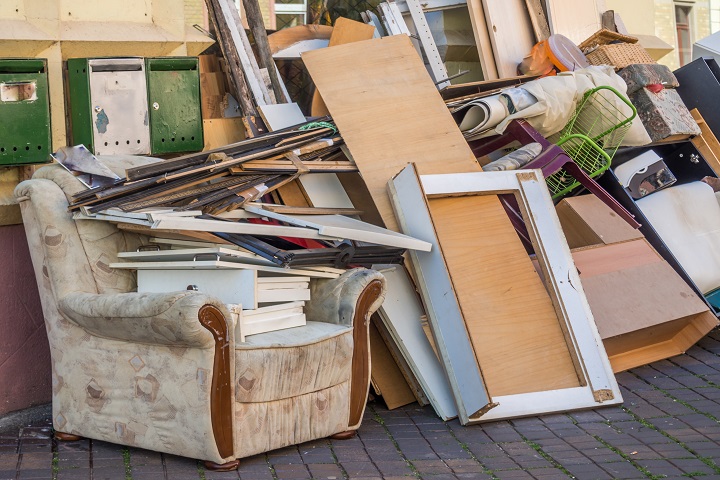
The inventory of brominated flame retardants present in our waste streams is significant, and perhaps greater than chlorinated textiles and plastics. Just look around: your sofas, pillows, cushions, fabrics, clothes, surfaces, gadgets, electronics, and even your car interior have had brominated flame retardant chemical treatment to satisfy the fire safety regulations of 1988.
Throughout the 2010s, scientists and researchers were exploring whether, like chlorinated dioxins, brominated dioxins could be produced from combustion processes as part of waste streams. Could it be proven that if you burn bromine, carbon and hydrogen at temperatures above 450°C, using oxygen as a source of fuel, a combination of the 210 dioxin/furan congeners could be formed, potentially at high (%) levels?
The answer to that question, unfortunately, is yes.
Looking to the future
In 2023, brominated dioxins are of public interest worldwide. We continue to use a significant amount of brominated flame retardants in our domestic products, so the potential of forming these kinds of dioxins when we dispose of these products is huge.
The Environment Agency has just started monitoring chimney stack emissions from municipal solid waste incinerators within England and Wales. Regional environmental protection agencies worldwide are applying the same measures.
Even though not designated as Persistent Organic Pollutants, brominated dioxins have similar toxicity to compounds listed in the Stockholm Convention (2019). They move through soils and bypass water filtration systems without breaking down, making their way into the food chain easily. So, the food chain will be the next area to protect, as we have been burning brominated flame retardants for many years without any restriction.
The legacy of chlorinated dioxins continues to take shape, and legislation helps us manage the dangers that they pose. This chapter is still being written.
A new chapter in history has started for brominated dioxins. Will it play out the same way as chlorinated dioxins? As we continue with our waste practices, they will remain a pollutant of concern, and the legacy of these compounds could be greater than we imagine. As George Santayana said, those who cannot remember the past are condemned to repeat it.
How can Marchwood help?
Marchwood is the only UK laboratory to test for brominated dioxins in line with new legislation. The test can be undertaken as a standalone service, or brominated dioxins can be analysed alongside chlorinated dioxins and PCBs.
For more information or to book in your tests now, contact us today.